
Skin changes gradually. Texture becomes less even, pores look more noticeable, acne scars from years ago remain visible, and a complexion that once looked bright can start to look dull or tired. Topical products can help maintain skin, but many people eventually want a treatment that works with the skin’s own repair process. If you are researching microneedling in Newport Beach, this guide explains what the treatment is, what it can address, how PRP and topical exosome serum add-ons fit in, what a session involves, what recovery looks like, and the risks to discuss before you book.
At Beyond Restore, we offer microneedling as an advanced collagen induction therapy. It is a minimally invasive, non-surgical option for people who want smoother, firmer-looking, more even skin with little downtime, and every treatment begins with a consultation so the plan fits your skin and your goals.
What Is Microneedling?
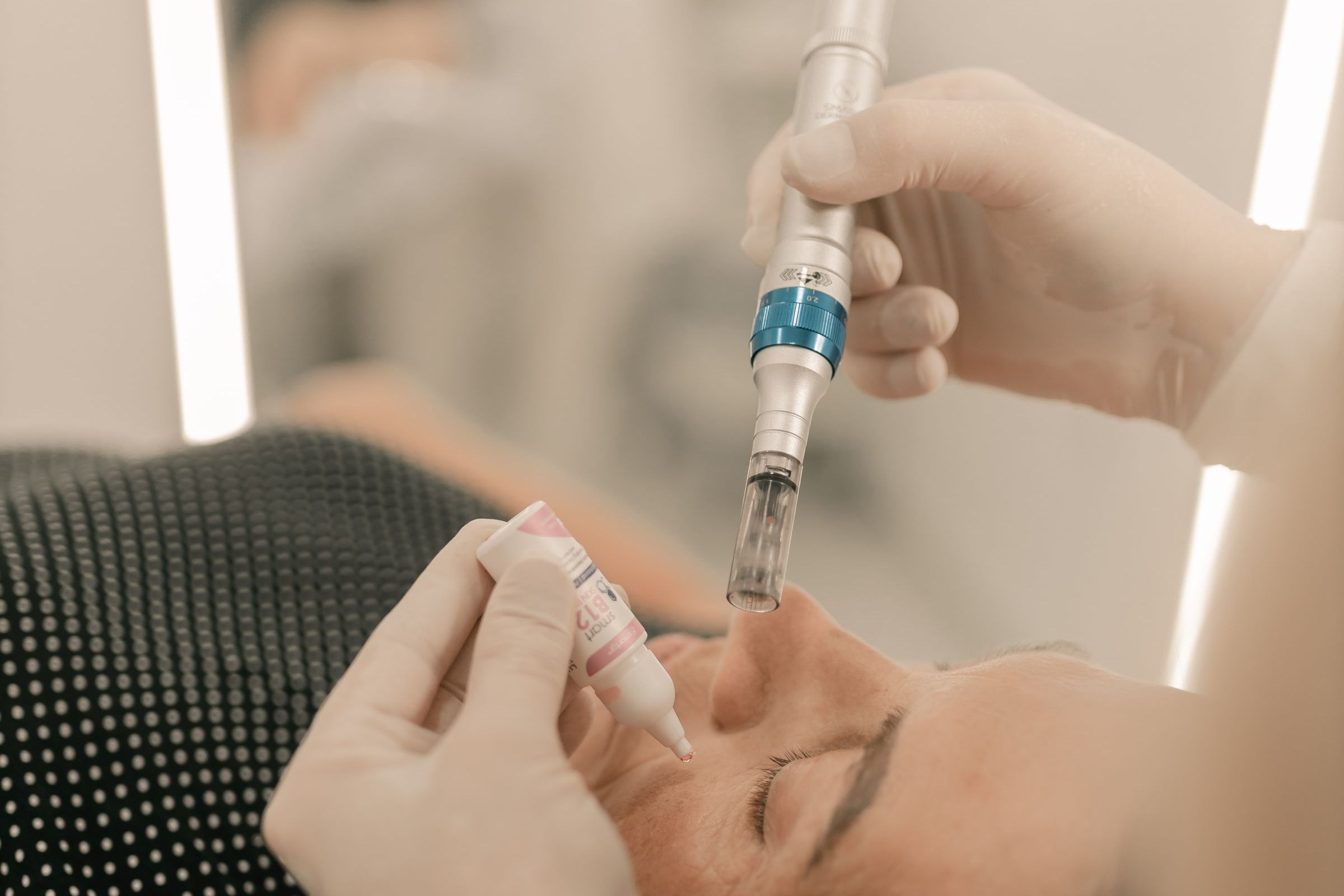
Microneedling is a minimally invasive treatment that stimulates the skin’s natural ability to repair itself. A device fitted with ultra-fine needles creates precise, controlled micro-injuries in the skin. Those tiny channels prompt the body’s repair response, which triggers collagen and elastin production. Collagen and elastin are the proteins that help skin look firm and smooth.
Microneedling requires little downtime and can be used on a wide range of skin types and tones. Because the treatment relies on mechanical stimulation rather than heat or light, we can adjust the treatment depth to your skin’s needs and goals, and the treatment can be adapted for delicate areas such as under the eyes or around the lips.
Microneedling is sometimes called collagen induction therapy, which describes the goal well: rather than covering a concern, the treatment encourages the skin to rebuild over a series of sessions.
What Can Microneedling Treat?
Microneedling is versatile. We use it to address a range of skin concerns, including:
- Fine lines and wrinkles
- Enlarged pores
- Acne scars
- Uneven skin tone and texture
- Dull or tired-looking skin
- Stretch marks
- Mild skin laxity
- Sun damage and age spots
Microneedling may also help uneven-looking tone look more even over a series of treatments. Pigment concerns usually change gradually rather than after a single visit.
Microneedling is designed for mild laxity. If you are noticing more significant loosening of the skin, we may discuss whether a treatment that adds radiofrequency energy, or a different approach, is a better fit.
Face and Body Treatment Areas
Most people think of microneedling as a facial treatment, and it can address concerns across the face. Because treatment depth can be adjusted, microneedling can also be adapted for more delicate areas such as under the eyes and around the lips. Stretch marks, which usually appear on the body rather than the face, are also on the list of concerns microneedling can address. At your consultation, we confirm which areas suit your goals and how each would fit into your plan.
What Microneedling Can and Cannot Do
Setting clear expectations matters. Microneedling can refine texture, soften the look of acne scars and fine lines, minimize the appearance of pores, brighten a dull complexion, and help even out tone over time. Those changes build gradually as the skin produces new collagen, which is why we plan treatments as a series rather than a single appointment.
Microneedling does not remove excess skin, lift deeper tissue, or replace volume, and it does not stop the skin from aging. It is designed for mild laxity and surface-level concerns. If your goals call for more, we will explain the options that fit your situation.
How Microneedling Works
The skin has a built-in repair system, and microneedling is designed to activate it. During treatment, the device passes over the skin and creates thousands of microscopic channels. In response, the body increases cellular turnover, produces new collagen, and strengthens the skin barrier from within.
The channels also open the skin’s barrier temporarily, which helps active ingredients applied during or right after treatment absorb more effectively than they would on intact skin. This is one reason we choose post-treatment products carefully.
PRP and Exosome Add-Ons
At Beyond Restore, you can choose to add PRP or a topical exosome serum to your microneedling session:
- PRP (platelet-rich plasma): A small blood sample is drawn and processed, and the plasma is applied to your skin during treatment.
- Topical exosome serum: A serum applied to the skin during your session.
Both add-ons are applied during your session. During your consultation, we explain what each option involves, including the blood draw for PRP, so you can decide whether an add-on makes sense for you.
Why People Choose Microneedling
What people tend to value about microneedling:
- Smoother texture. Rough patches, acne scars, and fine lines can soften as new collagen builds in the treated skin over a series of sessions.
- A brighter complexion. Increased cell turnover helps replace dull, tired-looking skin with a fresher surface that reflects light more evenly.
- Better product absorption. With the skin’s barrier briefly opened, active ingredients can penetrate more effectively instead of sitting on the surface.
- Minimal downtime. Most people have a day or two of mild redness, with only a 24-hour pause on makeup and intense workouts.
- Optional add-ons. PRP or a topical exosome serum can be added to a session for people who want them.
- A wide range of skin tones. Unlike many laser treatments, microneedling does not rely on heat or light, and we customize treatment depth for each client.
Is Microneedling Right for You?
You may be a good candidate for microneedling if:
- You want a non-surgical way to improve skin texture, scarring, or radiance
- You have fine lines, enlarged pores, acne scars, uneven tone, sun damage, stretch marks, or mild laxity
- You are comfortable with a series of treatments and a short period of redness after each one
- You have realistic expectations about gradual, cumulative improvement
Microneedling can be used on a wide range of skin types and tones. However, it may not be recommended if you have active acne, a bleeding disorder, or certain skin infections. We also ask about pregnancy or breastfeeding, recent isotretinoin use, a history of keloids or poor wound healing, a history of cold sores, recent sunburn, and medications such as blood thinners, because these can affect whether, when, or how we treat. That is why every microneedling plan at Beyond Restore starts with a comprehensive consultation to determine the approach that fits you.
Your Consultation

Your consultation is where we assess your skin and talk through what you want to change. We look at texture, tone, scarring, pores, and laxity; review your skin history, current products, and medications; and discuss what microneedling can and cannot do for your concerns.
From there, we build a custom plan, including the number of sessions we recommend, the areas to treat, and whether PRP or a topical exosome serum fits your goals. If another treatment, or a combination, would serve you better, we will tell you. Bring a list of your current skincare products, especially retinoids and exfoliating acids, so we can give you clear preparation instructions.
What Happens During Treatment
Before Your Appointment
For a few days before your appointment, avoid retinoids and harsh exfoliants, which can make the skin more sensitive. Arrive with clean, makeup-free skin. If you have chosen PRP, plan for a quick blood draw at the start of your visit.
During Your Session
Once your skin is cleansed, we use the comfort option you agreed on, such as a topical numbing cream, Pro-Nox (nitrous oxide) or lidocaine injections. Most people describe the sensation as pressure, light scratching or tingling. The microneedling device is then passed over the treatment areas, creating tiny channels in the skin. If you have chosen PRP or a topical exosome serum, it is applied during this step. Plan on about 1 hour, including numbing.
Right After Treatment
Any discomfort typically subsides soon after the session ends. Your skin will likely look pink to red and feel warm, and you will go home with simple aftercare instructions.
Microneedling Recovery and Downtime
Recovery is one of the reasons microneedling is popular. For the first 24 to 48 hours, you may notice redness, warmth, or mild swelling, similar to a sunburn. Most clients experience just a day or two of mild redness, and many return to their usual routine right away, apart from a 24-hour pause on makeup and intense workouts.
Aftercare is straightforward:
- Use a gentle cleanser and moisturizer
- Apply SPF daily and limit sun exposure while your skin recovers
- Avoid makeup for at least 24 hours to reduce irritation and the chance of bacteria entering the skin
- Skip intense workouts for 24 hours
When you resume makeup, use clean brushes and mineral-based products. Your skin may feel tighter and look more radiant within the first few days. If you notice anything beyond the expected redness and warmth, contact us.
Results Timeline
- First few days: Skin may feel tighter and look more radiant as initial redness settles.
- 1 to 2 weeks: Many people begin to see smoother, more radiant skin as collagen production increases.
- Over a series: You may see improvement after a single session, but we usually recommend 3 to 4 treatments spaced a few weeks apart, especially for scarring or deeper lines.
- Maintenance: After your initial series, maintenance sessions as needed help sustain your results.
Results depend on your skin, your concerns, and how consistently you follow your plan and protect your skin from the sun. Individual results vary. You can browse examples of our work in our gallery.
What Are the Risks of Microneedling?
Microneedling is minimally invasive, but it is still a medical-aesthetic procedure that creates controlled injuries in the skin. Expected effects include temporary redness, warmth, mild swelling, and sensitivity for a day or two. Some people also notice pinpoint bleeding during treatment, dryness or light flaking as the skin recovers, or a few breakouts. Less common risks include bruising, infection, changes in pigmentation, and, rarely, scarring. If you choose PRP, the blood draw can cause minor bruising or tenderness at the draw site.
Careful screening and aftercare help reduce these risks. That is why we review your medical history, medications, and skin conditions before treating, and why we postpone treatment when there is active acne or an active skin infection. We review your individual risks during your consultation.
Microneedling vs. Lasers and Other Treatments
Microneedling uses mechanical stimulation to activate collagen production, while lasers use heat and light. Microneedling tends to involve less downtime and can be used on a wide range of skin tones, whereas some lasers can pose risks for deeper skin tones.
Microneedling is often one part of a broader skin plan. Depending on your goals, we may discuss:
- Morpheus8: Combines microneedling with radiofrequency (RF) energy to treat deeper layers. It may be considered when tightening is a bigger priority than texture alone. Our Morpheus8 guide explains how it compares.
- HydraFacial: A facial that cleanses, exfoliates, extracts, and hydrates in one session. It is a lighter option for ongoing maintenance. Read more in our HydraFacial guide.
- Chemical peels: Professional-strength exfoliating treatments that use a blend of acids to address surface tone and texture.
When treatments are combined, we space them so your skin has time to recover between sessions. We will recommend the order and timing during your consultation.
Why Choose Beyond Restore for Microneedling in Newport Beach
We treat microneedling as a customized medical-aesthetic treatment, not a one-size-fits-all add-on. Every plan starts with an assessment of your skin, and we adjust treatment depth, areas, and the number of sessions to your concerns rather than following a fixed package. You can choose whether to add PRP or a topical exosome serum, and we explain what each involves before you decide.
Because we also offer Morpheus8, HydraFacial, chemical peels, and other skin treatments, we can recommend the option or combination that fits your skin instead of steering everyone toward the same treatment. Our office at 1501 Westcliff Dr #303 in Newport Beach is open weekdays, so an appointment of about 1 hour, including numbing, with little downtime can fit around a work schedule.
Frequently Asked Questions
Does microneedling hurt?
Your comfort is planned before treatment starts. Comfort options may include a topical numbing cream, Pro-Nox (nitrous oxide) or lidocaine injections, and we will recommend what fits you. Most people feel pressure, light scratching or tingling, and sensitivity varies by area and by person. Any discomfort usually fades soon after the session.
How many microneedling sessions will I need?
Many people notice a difference after one session, but microneedling works cumulatively. We usually recommend 3 to 4 treatments spaced a few weeks apart, then maintenance as needed. Concerns like acne scarring or deeper lines generally benefit most from a full series.
When can I wear makeup after microneedling?
Wait at least 24 hours. The micro-channels are still open during that time, and makeup can irritate the skin or carry bacteria into it. After 24 hours, use clean brushes and mineral-based products.
Is microneedling better than laser treatment?
It depends on your goal. Microneedling stimulates collagen mechanically, while lasers use heat and light. Microneedling usually has less downtime and can be used on a wide range of skin tones; some lasers carry more risk for deeper skin tones. We recommend whichever approach fits your skin.
Should I add PRP or a topical exosome serum?
It is optional. For PRP (platelet-rich plasma), a small blood sample is drawn and processed, and the plasma is applied to your skin during microneedling. A topical exosome serum is applied to the skin during your session. We discuss whether either fits your goals, and what each involves, at your consultation.
Can microneedling help with dark spots or uneven pigmentation?
It may help uneven-looking tone look more even over a series of treatments. Some types of pigmentation, such as melasma, are harder to treat and can darken after skin procedures, so we check your skin first and may suggest another approach. Daily sun protection is important for keeping tone even.
Can microneedling be done under the eyes or around the lips?
Yes. Treatment can be adapted for delicate areas such as under the eyes and around the lips. We adjust treatment depth for thinner skin in those areas.
Does microneedling help with stretch marks?
Stretch marks are among the concerns microneedling can address. Improvement is gradual and usually requires a series of sessions. We assess your stretch marks at your consultation and set realistic expectations.
Who should not get microneedling?
We may delay or avoid microneedling if you have active acne, a bleeding disorder, or certain skin infections. We also screen for pregnancy, recent isotretinoin use, keloid history, cold sores, and blood-thinning medications. Please share your full medical history so we can plan your treatment.
How long is the downtime after microneedling?
Most people have redness, warmth, or mild swelling for 24 to 48 hours. You can usually return to normal activities right away, but skip makeup and intense workouts for 24 hours and use SPF daily.
Book Your Microneedling Consultation in Newport Beach
A good place to start is a conversation. We will assess your skin, talk through your goals, explain whether PRP or a topical exosome serum fits your goals, and recommend a treatment plan that fits your schedule, with no pressure to decide on the spot.
To help fit care into your budget, we offer financing through PatientFi, CareCredit, and Cherry.
Beyond Restore Wellness & Aesthetics
1501 Westcliff Dr #303, Newport Beach, CA 92660
- Call: 949-503-9621
- Hours: Mon–Thu 9 AM–5 PM · Fri 9 AM–4 PM
This article is for general educational purposes only and is not medical advice. Individual results vary, and every aesthetic treatment carries risks. A consultation with a qualified medical professional is required to determine whether microneedling is right for you.