
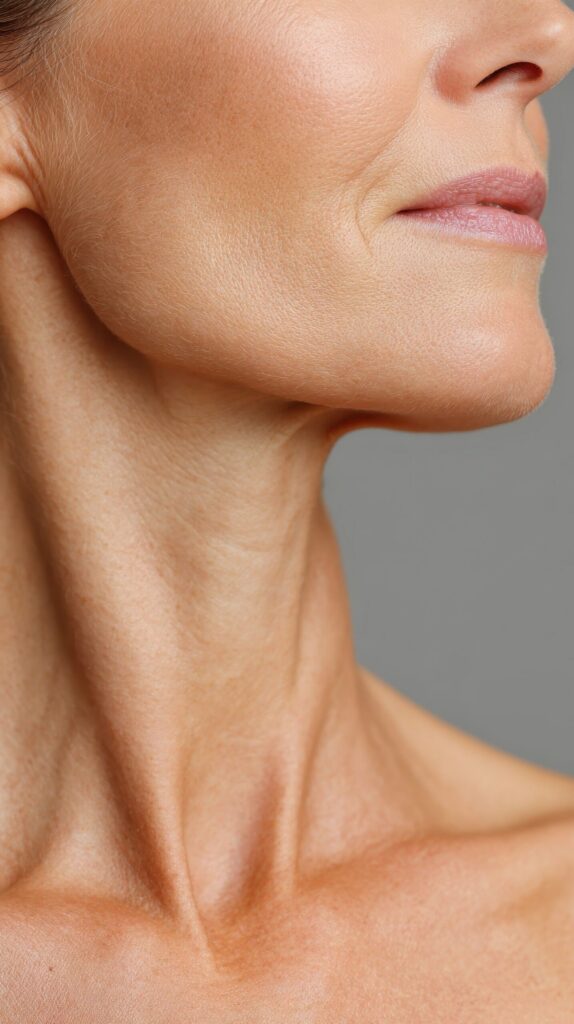
SMAS Facelift in Newport Beach
Surgical Facial Rejuvenation That Tightens the Deeper Layer
A facelift is about looking like yourself, just more rested. An SMAS facelift lifts and tightens the supporting layer beneath the skin of the lower face and jawline, rather than relying on pulling the skin alone. At Beyond Restore, SMAS facelifts are performed by Dr. Andrew Jarminski, MD, or Dr. Paris Sabo, MD.
What Is an SMAS Facelift?
Beneath the skin of the face is a layer of muscle and connective tissue called the SMAS (superficial musculoaponeurotic system). It continues into the neck as the platysma muscle. With age, this layer and the tissue it supports gradually descend.
In an SMAS facelift, the skin is lifted, the SMAS is tightened, folded or partially trimmed and secured in a higher position, and the skin is then redraped over it with the excess removed. This is often described as a traditional facelift technique.
SMAS Facelift Treatment Areas and Concerns
An SMAS facelift is designed to address age-related changes in the lower face and jawline, such as:
- Jowls and sagging skin along the cheeks and jawline
- Loss of definition in the jawline
- Laxity in the lower face
- Loose skin in the upper neck
How It Works
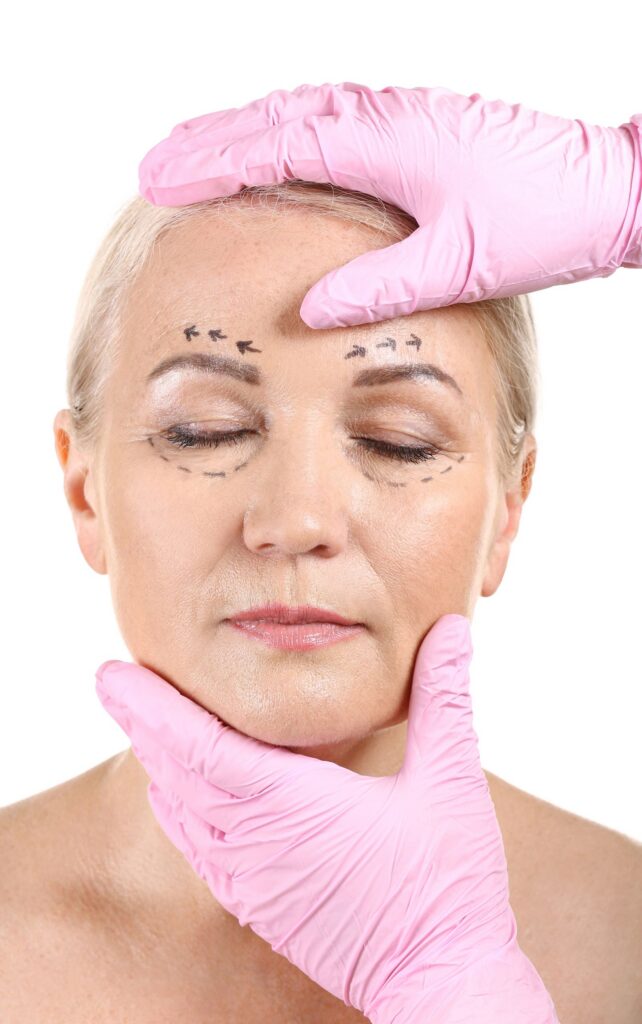
1. The Foundation Weakens
Your skin is supported by collagen, fat, muscle and ligaments. As you age, that structure weakens and descends, and the skin begins to sag.
2. Lifting the Skin
Through incisions along the hairline and around the ears, the skin is lifted away from the SMAS layer.
3. Tightening the SMAS
The SMAS is tightened, folded or partially trimmed and secured, so the deeper layer carries more of the lift.
4. Redraping the Skin
The skin is redraped over the tightened layer, excess skin is trimmed, and the incisions are closed.
5. Discreet Incisions
Incisions are typically placed along the hairline and around the ears, where they are easier to conceal.
SMAS Facelift vs. Deep Plane Facelift
Both are surgical facelifts, and both work with the SMAS layer. The difference is where the surgeon works and how the tissue is moved:
- SMAS facelift: the skin is typically lifted separately, and the SMAS is tightened, folded or partially trimmed beneath it before the skin is redraped.
- Deep plane facelift: the surgeon works beneath the SMAS, releases the retaining ligaments, and lifts the deeper tissue and skin together as one unit.
One is not simply better than the other. The right approach depends on your anatomy, the degree of laxity, and your goals, and it is chosen with a qualified medical professional at your consultation.
Considering a Deep Plane Facelift?
Beyond Restore also offers the deep plane facelift. Learn how it works, what to expect and the recovery on our Deep Plane Facelift page.
What to Expect Before, During, and After an SMAS Facelift
Before
Your journey begins with a free consultation, where a qualified medical professional assesses your skin, facial structure and aging pattern, reviews your health history, and discusses which facelift approach fits your goals. You’ll receive pre-op instructions to follow before surgery.
During
At Beyond Restore, SMAS facelifts are performed under local anesthesia. Incisions are made along the hairline and around the ears, the SMAS is tightened and secured, the skin is redraped, and the incisions are closed. The procedure typically takes about 2 to 4 hours. There is no overnight stay.
After
Swelling, bruising, tightness and some numbness are expected. Visible swelling and bruising commonly improve over about 2-3 weeks, but recovery varies from person to person. You’ll be given detailed post-op care instructions and follow-up visits to check your progress. Sutures are usually removed in about a week, and many people feel ready for light activity within 10-14 days. Your surgeon will tell you when you can return to work, exercise and other activities.
Risks
As with any surgery, an SMAS facelift has risks, including bleeding or hematoma, infection, scarring, injury to the facial nerve branches, asymmetry, numbness or changes in sensation, wound complications, and anesthesia risks. We’ll review your individual risks during your consultation.

Results Timeline
Changes become easier to see as swelling goes down over the first weeks. Final results develop gradually over several months as the tissues settle. A facelift does not stop aging, and your face will continue to change over time. Individual results vary.
Is an SMAS Facelift Right for Me?
- You’re bothered by jowls, laxity in the lower face, or loss of jawline definition
- You have laxity that fillers, threads or skin treatments can’t fully address
- You’re in generally good health and don’t smoke, or are willing to stop before and after surgery
- You have realistic expectations and want to look like yourself, just refreshed
An SMAS facelift can be combined with a neck lift or with eyelid surgery (Blepharoplasty). Your surgeon will talk through whether a combined plan fits your goals.
Pricing and Financing
Pricing is reviewed at your free consultation. Financing is available through PatientFi, CareCredit and Cherry. Learn about financing
Questions? We have answers!
Who performs SMAS facelifts at Beyond Restore?
SMAS facelifts are performed by Dr. Andrew Jarminski, MD, or Dr. Paris Sabo, MD.
Is an SMAS facelift done under general anesthesia?
No. At Beyond Restore, SMAS facelifts are performed under local anesthesia, and there is no overnight stay. The procedure typically takes about 2 to 4 hours.
What is recovery like?
Swelling, bruising, tightness and some numbness are expected. Visible swelling and bruising commonly improve over about 2-3 weeks, and sutures are usually removed in about a week. Recovery varies from person to person.
Can an SMAS facelift be combined with other procedures?
Yes. It can be combined with a neck lift or with eyelid surgery (blepharoplasty).
What is an SMAS facelift?
An SMAS facelift is a surgical facelift that tightens the SMAS (superficial musculoaponeurotic system), the layer of muscle and connective tissue beneath the skin of the face. The SMAS is lifted or folded and secured, and the skin is then redraped and trimmed.
How is an SMAS facelift different from a deep plane facelift?
Both techniques work with the SMAS layer. In an SMAS facelift, the skin is typically lifted separately and the SMAS is tightened, folded or partially trimmed beneath it. In a deep plane facelift, the surgeon works beneath the SMAS, releases the retaining ligaments, and lifts the deeper tissue and skin together as one unit. Neither is right for everyone; the approach depends on your anatomy and goals.
Which facelift approach is right for me?
It depends on the individual and is decided at your free consultation, after a qualified medical professional examines your skin, facial structure and health history and talks through your goals.
Will I have scars?
All surgery leaves scars. Facelift incisions are typically placed along the hairline and around the ears, where they are easier to conceal.
What are the risks?
As with any surgery, there are risks, including bleeding or hematoma, infection, scarring, injury to the facial nerve branches, asymmetry, numbness or changes in sensation, wound complications, and anesthesia risks. Your individual risks are reviewed at your consultation.
How much does an SMAS facelift cost?
Pricing is reviewed at your free consultation. Financing is available through PatientFi, CareCredit and Cherry.
Ready to Restore Your Look?
Schedule your free consultation at Beyond Restore. 1501 Westcliff Dr #303, Newport Beach, CA 92660 · Call 949-503-9621
Hours: Mon–Thu 9 AM–5 PM · Fri 9 AM–4 PM